
Steel Buildings
Looking for a building that stands the test of time? Steel tube frame construction delivers unmatched strength, durability, and low maintenance — even in the toughest conditions. From garages and workshops to barns and commercial spaces, steel gives you the confidence to build it once and build it right.

Why Steel Tube Frame Construction is the Smart, Long-Term Choice
Wood Post Frame
(Pole Barn Style)
Large wooden posts set into the ground or mounted to piers. Widely spaced framing (8–12 ft) common in rural or agricultural buildings.
PROS:
CONS:
Traditional Stick-Built
(16″ On-Center Framing)
Uses closely spaced wood studs (usually 16″ apart) built on a slab or foundation. Standard for residential homes and light-duty structures.
PROS:
CONS:
Steel Tube Frame Construction
Precision-engineered steel tubing creates a rigid, long-lasting frame. Designed to handle extreme conditions with minimal maintenance.
Key Advantages – Steel Leads in Every Category
Considerations:
Shops


Carports and RV/Camper Covers


Barndominiums


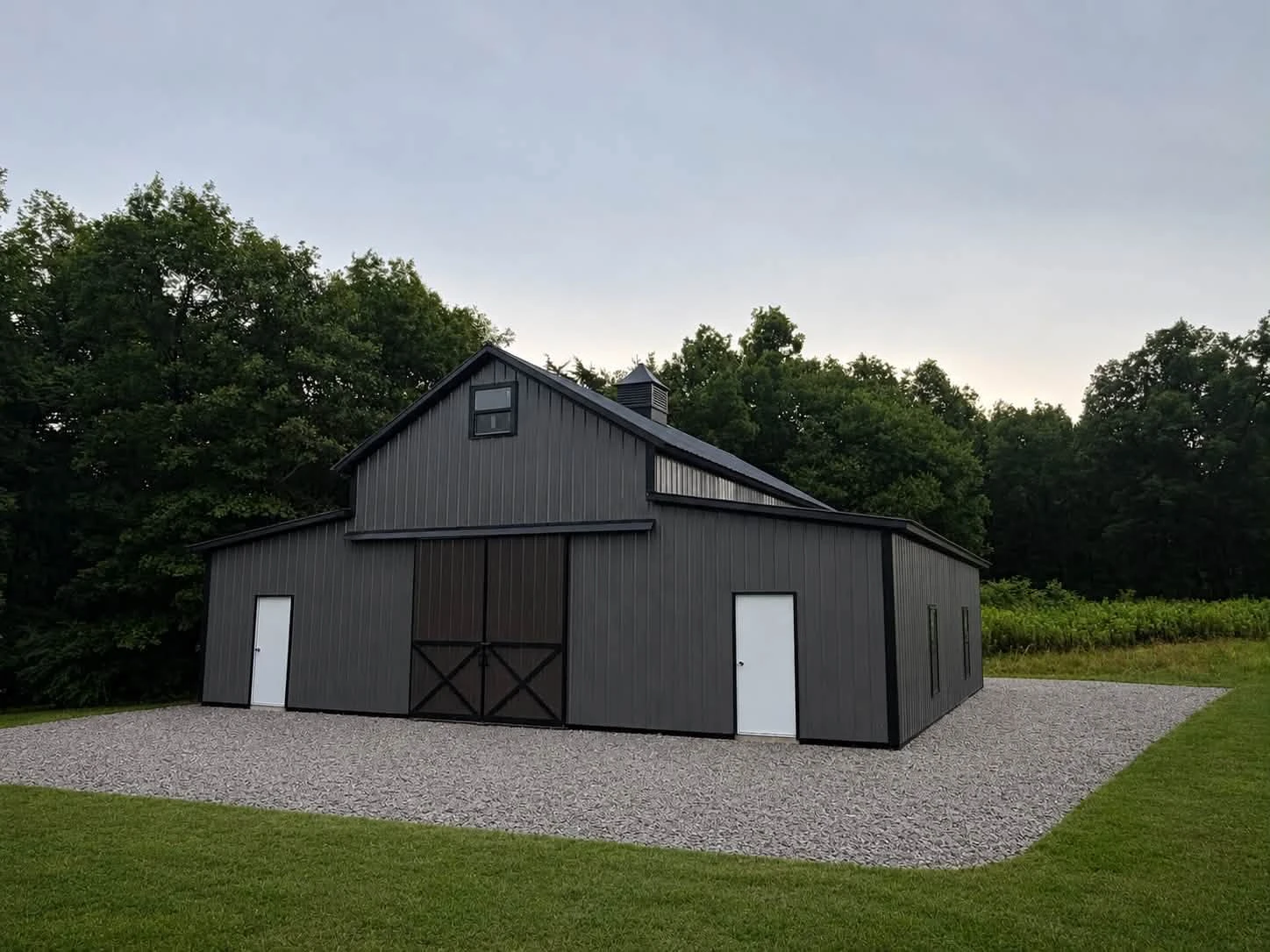


Horizontal Vs. Vertical Wall Panels
Horizontal
- Cheaper upfront cost – often the “default” option quoted by many dealers
- Panels run sideways, attaching across wall framing.
- Appearance: Can show more waves and ripples over time.
- Longevity: Prone to sagging and less resistant to wind-driven
- Maintenance: Seams may trap dirt, debris, and moisture.
Vertical
- Stronger, longer-lasting investment
- Panels run up and down, fastened to full-length purlins.
- Appearance: Sleek, professional look that enhances curb appeal.
- Durability: Better structural strength, sheds water and debris naturally.
- Value: Longer panel life, reduced maintenance, and higher overall resale value.
